


This summer’s World Cup will witness a shift in broadcasting dynamics, as the longstanding rivalry between BBC and ITV takes a backseat.
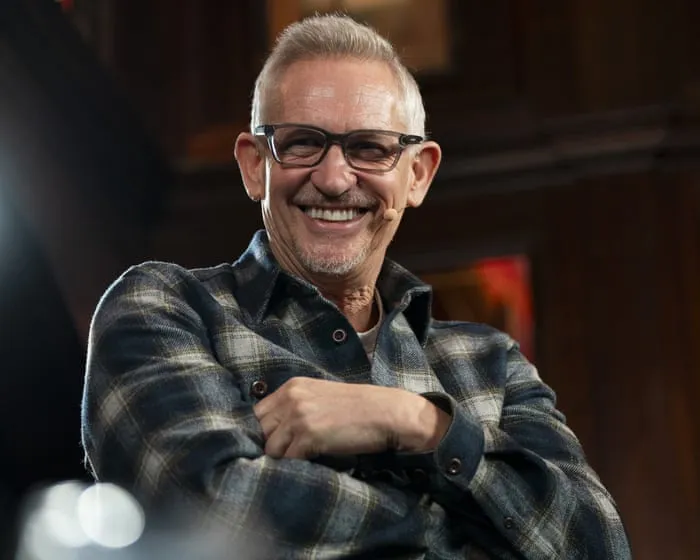
In a historic first for the tournament, the 48-team event will not only unfold across three nations but will also transform into a worldwide media spectacle. For the first time, platforms like YouTube and TikTok will provide live match coverage, while Netflix introduces a daily show, ‘The Rest is Football’, hosted by Gary Lineker, relocating to Times Square for nearly six weeks.
Lineker will kick off the inaugural episode alongside ‘The Rest is Football’ regulars Alan Shearer and Micah Richards, with the show set to launch at 6am UK time on Wednesday. Prominent guests such as Harry Maguire, Frank Lampard, and Patrick Vieira are slated to appear throughout the tournament.
Richards has humorously referenced the impending “podcast wars,” noting that his colleague Gary Neville from Sky Sports will also be stationed in New York with his podcast, ‘Stick to Football’. However, Netflix’s substantial investment in ‘The Rest is Football’ could elevate its profile and reach a much broader audience.
The streaming giant has committed £14 million for 40 daily episodes, which will include interviews, on-site reporting, and the usual football banter, all aimed at retaining its audience amid the World Cup’s competition.
In contrast, ‘Stick to Football’ seems to be scaling back its plans. After broadcasting some episodes on ITV during Euro 2024, Neville’s show featuring Ian Wright, Roy Keane, and Jill Scott will now be limited to YouTube and consist of just 12 episodes due to ITV commitments.
This podcast rivalry highlights Netflix’s increasing interest in live sports, especially after securing exclusive rights for the next two Women’s World Cups, demonstrating its intent to engage with the football community.
“Netflix didn’t have a way to capture a World Cup audience because they don’t have the live games,” explains Tony Pastor, co-founder of Goalhanger, which produces ‘The Rest is Football’.
“They want to be part of the World Cup conversation and have a daily offering, to give their audience a reason to turn on each day and not park the channel for six weeks.”
With such a significant investment, Lineker and his team will face pressure to generate impressive viewership numbers. The experienced presenter, who has hosted live BBC coverage for six World Cups and played in two, is well-prepared for the challenge.
The wider broadcasting landscape will be closely monitored, as any move by Netflix to expand its football content could significantly impact its current sports offerings, which have primarily focused on singular events like Major League Baseball’s opening night and NFL’s Christmas Day game.
“The Rest is Football on Netflix is fascinating,” remarks Alex Kay-Jelski, the BBC’s director of sport. “If a show like that can do well on a big streaming platform then it will be a significant development.”
On the other hand, the BBC’s plans for the tournament are more modest, with its coverage originating from Salford until the final week. Presenters Kelly Cates, Gaby Logan, and Mark Chapman will share hosting duties.
The corporation is currently undergoing a redundancy program, resulting in approximately 2,000 job losses, which has influenced their financial decisions as well as their focus on sustainability.
The BBC aims to invest in long-term products, unveiling a new studio this week alongside a suite of new digital services to attract a younger demographic.
Prominent pundits, including Wayne Rooney, are expected to enhance the TV coverage’s appeal, while Thomas Frank’s first media appearances following his sacking from Tottenham are likely to generate considerable interest.
“We’ve built a 24/7 World Cup content machine, which is better connected and integrated than ever before,” Kay-Jelski adds. “There will be something for everyone, whether that be live TV coverage, Radio Five, YouTube shorts, news and analysis, or interactive World Cup games.”
Despite constraints, Kay-Jelski expresses satisfaction with their current setup: “If we had £200m to spend then maybe we would have done things differently, but we’re very happy with where we’ve ended up. We cannot just focus on a six-week tournament, we have to invest for the long term.”
ITV is adopting a more traditional approach to their coverage, led by Laura Woods and Mark Pougatch in New York. Their director of sport, Niall Sloane, is attending his 11th World Cup, having first participated 40 years ago when he operated a camera behind the goal at the Azteca Stadium.
Sloane highlights concerns about the sheer volume of football on television, stating that the increase from 64 to 104 matches due to the tournament’s expansion is not a welcome change.
ITV will broadcast 51 matches, slightly fewer than the BBC’s 54, with both networks sharing the final. ITV has secured the rights to the opening game between Mexico and South Africa, as well as England’s first match against Croatia next Wednesday.
The BBC appears to be banking on Thomas Tuchel’s team advancing deep into the tournament, as they have the first selection of semi-finals and will cover England’s matches in the knockout rounds should they advance.
While the BBC is expected to dominate viewership, the World Cup is set to provide a significant commercial boost for ITV, especially as it approaches the final stages of its acquisition by Comcast, the parent company of Sky.
ITV’s record audience of 10.2 million for England’s Women’s Euro 2025 semi-final victory over Italy is a benchmark that is likely to be surpassed this summer.
“We will be producing lots of shorter content, but it will still be a while before we lose the significance of two lots of 45 minutes,” Sloane remarks. “As sport has grown in popularity, the importance of live events has increased.”
Despite the excitement, Sloane shares reservations regarding the additional 16 teams, suggesting that it may dilute the quality of matches. He fears that some games may not meet the standards expected at a World Cup.
With the packed schedule and 40% of matches set to kick off after midnight UK time, FIFA’s new social media strategy seems well-timed. YouTube and TikTok have secured rights to livestream the first ten minutes of select matches, although many viewers may find themselves dozing off by the end of that brief window.