


This article is part of a collaborative effort among top media organizations from the 48 nations participating in the 2026 World Cup. Starting June 11, will feature daily previews from three different countries.
Team Strategy
The Croatian national team, known as the Vatreni or Blazers, encountered minimal challenges during the qualifying rounds, with Czechia being the only notable opponent to achieve a draw. Consequently, coach Zlatko Dalic utilized these matches to explore different player combinations. Following Croatia’s victory over the Faroe Islands last November, which ensured their top position in the group with one game remaining, Dalic remarked, “I will never try to play with three at the back again.”
However, during friendly matches in March against Colombia, which ended in a 2-1 victory, and Brazil, where Croatia lost 3-1, Dalic reconsidered this approach, experimenting with the three-defender setup with varied outcomes.
Nonetheless, it is anticipated that this formation will serve primarily as a backup plan for the World Cup. Croatia’s strategy heavily relies on the services of Josko Gvardiol and Mateo Kovacic, and with the Manchester City players returning from injuries, Dalic is likely to revert to a four-man defense—most likely in a 4-3-3 or 4-2-3-1 setup, which has been a staple throughout his tenure.
Croatia: Group L Fixtures
17 June vs. England, Dallas (3 PM local, 9 PM BST, 18 June 6 AM AEST)
23 June vs. Panama, Toronto (7 PM local, 24 June 12 AM BST, 24 June 9 AM AEST)
27 June vs. Ghana, Philadelphia (5 PM local, 10 PM BST, 28 June 5 AM AEST)
Croatia will field one of the oldest squads in the tournament, with a significant portion of their starting lineup in their 30s, including captain Luka Modric, who is now 40. This wealth of experience brings a strong winning mentality, but it also raises concerns about the longevity of veteran players.
The performance of seasoned players like Modric, Kovacic (32), Ivan Perisic (37), and Andrej Kramaric (turning 35) is under scrutiny. Additionally, questions arise regarding whether younger, less-established players are prepared to step into more prominent roles. Croatia has a history of exceeding expectations, and after their successes in the last two World Cups, they are eager to make one final significant impact.
Coaching Dynamics
Zlatko Dalic’s tenure of nearly a decade is a remarkable feat in Croatia, a nation known for swiftly changing coaches. Dalic has solidified his position through successful leadership, making him virtually indispensable. However, discussions about his contract expiring after this World Cup can elicit a defensive reaction. “Leave me in peace to do my job,” he responded sharply when questioned about his future. “I’m not going to sign an extension if anyone is forcing me to decide now.” This will be his third World Cup as head coach, having previously led Croatia to a silver medal in 2018 and a bronze in 2022.
Key Player
Luka Modric has been the cornerstone of Croatian football for two decades since his international debut, and the team continues to revolve around this midfield virtuoso. Although he may no longer possess the same level of play as during his Ballon d’Or and Champions League triumphs with Real Madrid, his influence on the pitch remains significant. After transferring to AC Milan in 2025, he has been a standout performer, recently netting his 29th international goal in a warm-up against Slovenia. Modric is on the verge of reaching the 200-cap milestone in North America.
Player to Watch
Luka Vuskovic, a talented center-back known for his ball-handling and aerial prowess, is one to keep an eye on. At just 19 years old, the Tottenham player, who was on loan at Hamburg in the Bundesliga last season, has proven himself as a leader across various age groups and leagues. Vuskovic has earned Dalic’s trust and is expected to feature prominently in the squad during the tournament. Many are eager to see if he can thrive on such a grand stage.
Unsung Contributor
Mateo Kovacic has often played in Modric’s shadow, not always receiving the recognition he deserves as a pivotal midfielder for Croatia. His absence highlights his true value; when present, he allows Modric greater freedom and facilitates smoother transitions in play. Dalic considers Kovacic’s role so crucial that the team’s formation often hinges on his performance. If Kovacic underperforms, Croatia may shift from a 4-3-3 to a 4-2-3-1, or even a three-man defense.
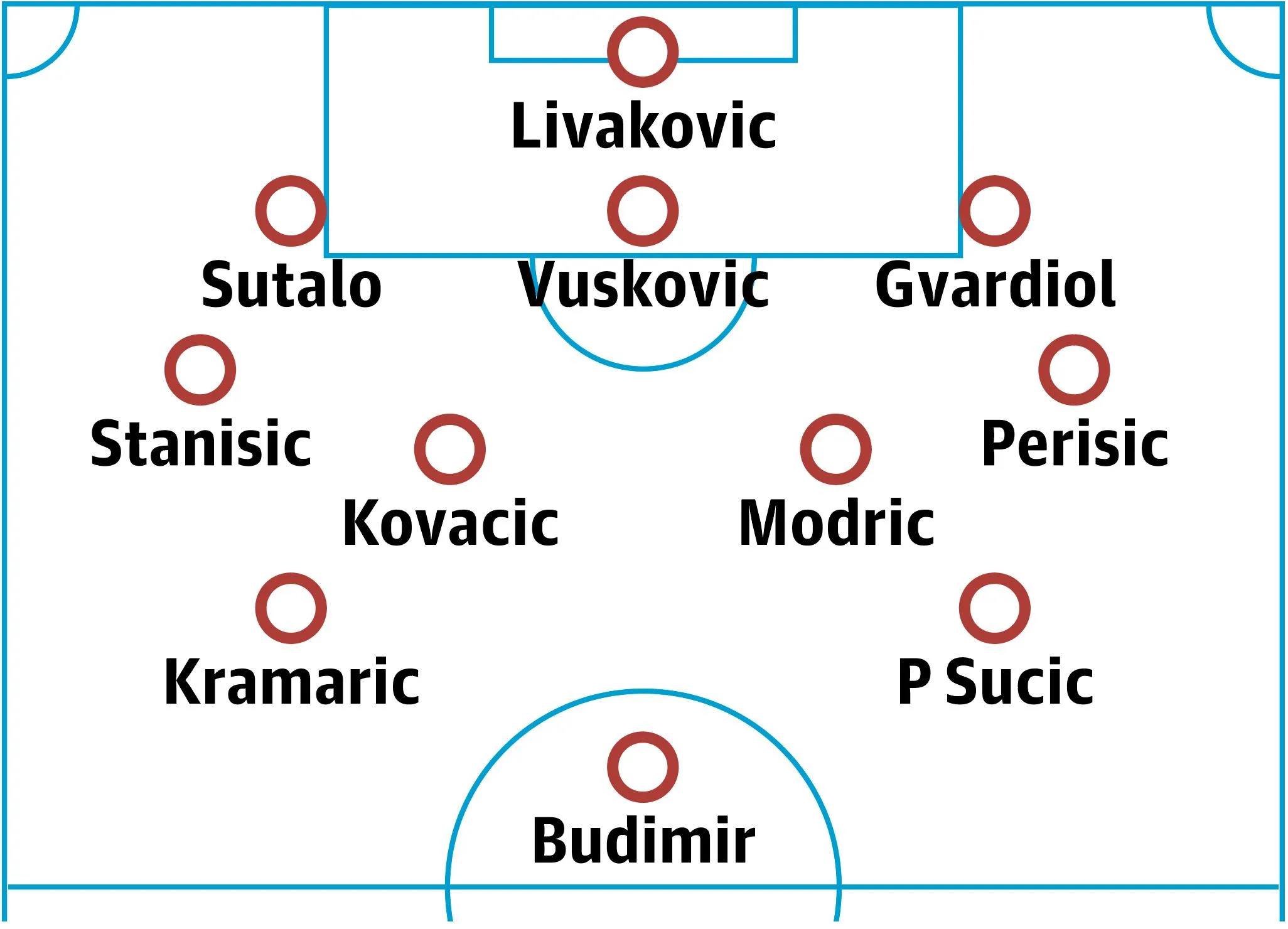
Projected Starting XI
Fan Expectations
Croatian fans have faced scrutiny for their behavior, leading to various sanctions over the years. While their passionate support for the team is expected, fans traveling to North America are anticipated to enjoy the experience rather than engage in protests or disruptive actions. This hopeful outlook aims to foster a positive atmosphere during the tournament.
Political Context
In Croatia, the adage of “not mixing sport with politics” is frequently cited, especially when convenient for those in power. The country’s politicians have largely refrained from commenting on the Trump administration, suggesting that the team and its representatives will likely maintain a neutral stance. While fans may express grievances about ticket prices or other matters, Croatia is not expected to create any political controversies during the World Cup.