


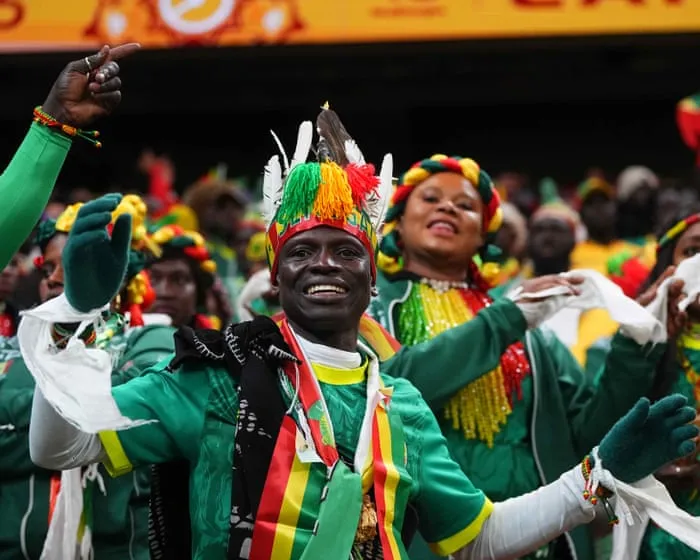
With an unprecedented ten African nations set to compete in the first-ever 48-team World Cup finals, a crucial inquiry emerges: after Morocco’s historic semi-final appearance in Qatar, can any of these squads push beyond that mark?
The aspiration of seeing an African country hoist the World Cup trophy felt feasible back in 1990, when Cameroon stunned the globe by toppling defending champions Argentina in the tournament’s opening game. However, their impressive journey concluded with a tight 3-2 defeat against England in the quarter-finals. Since that moment, the last eight World Cups have been challenging for African teams trying to realize their potential.
Pelé, the iconic footballer, famously asserted, “An African nation will lift the World Cup before the year 2000.” The fact that this prediction remains unfulfilled is not due to a lack of talent but results from self-defeating governance issues, as pointed out by Joseph-Antoine Bell, who was a goalkeeper for Cameroon’s World Cup teams in 1982, 1990, and 1994.
“Our football is stagnating… we fail to drive ourselves toward excellence,” Bell expressed, known for his candid observations regarding the flaws in African football. “Prior to the 1960s, Africa already produced exceptional players in Europe, showcasing that we are not lacking in talent. But what accomplishments have we made at the World Cup? Now that the tournament has expanded to 48 teams, are we naive enough to think our chances of winning have improved?”
“When the World Cup took place on African soil in 2010, many believed an African team would emerge victorious simply because it was hosted here. That’s absurd. Our odds of winning the World Cup are not getting better.”
This summer, Algeria, Cape Verde, Côte d’Ivoire, the Democratic Republic of the Congo, Egypt, Ghana, Morocco, Senegal, South Africa, and Tunisia will represent Africa on the global stage, while Cameroon and Nigeria will notably miss out. “Many see Cameroon as the leader in African football, but Morocco has truly set the bar, being the first to reach the knockout stage in 1986 and the first to advance to the semi-finals in Qatar,” Bell noted.
“I believe Morocco has the best chance for Africa in this World Cup, alongside Senegal, Côte d’Ivoire, and possibly Egypt, which has demonstrated consistency in qualifying. A team that consistently qualifies and improves can aspire to go further.”
Nonetheless, he stresses that teams must recognize that merely advancing past the group stage can no longer be their only goal. “The group stage, with 48 teams, is fundamentally different than when there were only 32. The aim is to win the World Cup, and the route to that trophy has transformed.”

Despite the uncertain futures of these teams, off-field issues continue to afflict several African nations as they head into the tournament, underscoring the failures of football federations that should be showcasing the continent’s finest.
Pape Thiaw, the head coach of Senegal, initially declined to board the flight from Dakar to the World Cup, protesting against the Senegal football federation’s failure to pay several months’ wages and the absence of a contract since his tenure lapsed after leading the team to the Africa Cup of Nations final in January. It took a last-minute intervention from the Senegalese government to resolve the impasse.
“To be the best in the world, you need not just outstanding players, coaches, and staff, but also effective governance to support them,” Bell argued. “Everything must align seamlessly. When your team comes from a nation that neglects to pay the coach’s salary and you claim you want to win the World Cup, it’s an insult to the rest of the world, where people work diligently to achieve success. We must begin to take this seriously.”
“Winning the World Cup demands much more than just gifted players; it necessitates strategic leadership and management before players step onto the pitch.”
As countless fans from the qualifying nations encounter challenges obtaining travel visas, the feeling of exclusion from an event designed to celebrate unity is palpable. “The absence of passionate, enthusiastic African supporters due to travel complications, high expenses, and visa issues for entering the United States is significant,” remarked Segun Odegbami, a former captain of Nigeria and 1980 Africa Cup of Nations champion.
“I have been waiting for 14 months to schedule an interview at the US embassy in Abuja… I am not a first-time visitor. I have had to cancel my plans.”
Considering Odegbami was in the US for the 1994 World Cup as the Super Eagles’ administrative manager, his current situation is particularly noteworthy. Nevertheless, he remains hopeful about the prospects for Africa’s teams in the coming weeks. “We have evolved from merely participating to becoming serious contenders for the top four. We are on the brink of something monumental.”
Opening the path to the final, and ultimately the trophy, presents a formidable challenge, especially in matches that can be decided by narrow margins and demand high professionalism. Yet, nothing would bring greater joy to Africa’s 1.5 billion inhabitants than having a significant presence at the MetLife Stadium on July 19.