


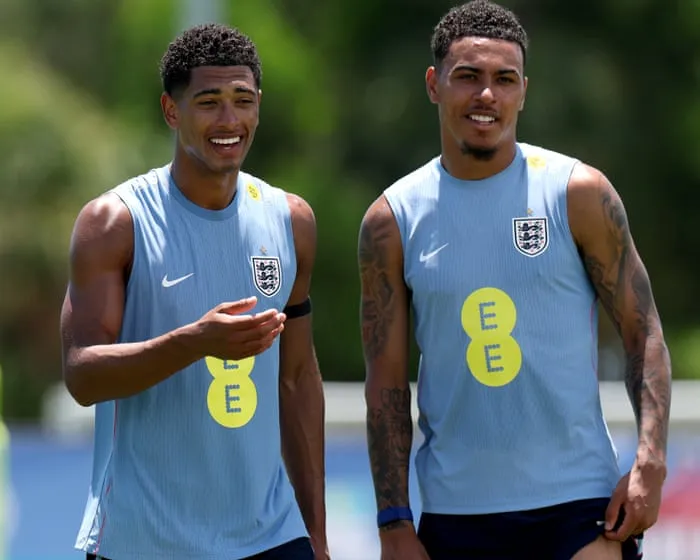
For Thomas Tuchel, the presence of Harry Kane on the team serves as a stark reminder of how dire things can get, especially when reflecting on the woeful England squad that left the 2014 World Cup after a dismal 0-0 tie with Costa Rica in Belo Horizonte.
Those were bleak times for English football. After suffering losses in their first two group matches in Brazil, the Football Association was left grappling with the realization that such humiliations were becoming all too familiar.
Roy Hodgson described the situation as a team “in a realm of despair,” and things took a turn for the worse when England succumbed to Iceland at Euro 2016. However, those disappointments belong to a bygone era. Under Gareth Southgate’s leadership, the national team experienced a revival, regaining pride and camaraderie. He stepped away following a near miss at Euro 2024, leaving Tuchel in a position to take the reins and aim for a second star on the jersey.
As anticipation builds for the 2026 World Cup, concerns linger about England’s dependency on Kane for scoring. Tuchel seemed unfazed after Kane’s brilliant header secured a win against New Zealand during last Saturday’s warm-up match in Tampa. Currently in phenomenal form, Kane netted 61 goals across all competitions with Bayern Munich this season and is a frontrunner for the Ballon d’Or, especially if he helps lead England to its first piece of silverware since 1966.
Despite these impressive statistics, questions remain. What is England’s strategy if Kane is effectively marked? Or worse, what if he sustains an injury on a tricky pitch in the United States?
Tuchel’s backup strikers possess talent, yet they do not reach elite status. Ollie Watkins concluded the season strongly with Aston Villa and has the ability to exploit fatigued defenses, though he squandered his only chance against New Zealand. Likewise, Ivan Toney struggled against the All Whites, primarily selected to draw defenders away from Kane during desperate moments.
This issue extends beyond just Watkins and Toney; it highlights the need for contributions from the wingers and attacking midfielders.
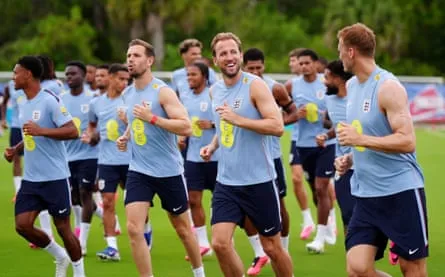
Tuchel is calling for more production from the forwards surrounding Kane, hoping at least one of them finds their scoring touch before England’s final warm-up match against Costa Rica in Orlando on Wednesday night. Marcus Rashford, the squad’s second-highest scorer with 18 goals in 71 appearances, was hesitant with his opportunities against New Zealand. A greater sense of confidence is essential. Bukayo Saka boasts a better strike rate than Rashford with 14 goals in 48 appearances, yet he remains unmatched on the flanks. Anthony Gordon has netted twice for England, while Noni Madueke has one goal. In terms of playmakers, Jude Bellingham has six goals, Eberechi Eze has three, and Morgan Rogers has one.
“The sheer numbers from our wide players and others do not meet the high standards we expect,” Tuchel remarked in March. He has sought greater output from his creative players at the club level. Observing England’s competitors, he would see Ousmane Dembélé and Kylian Mbappé standing out while Michael Olise netted a hat-trick for France against Northern Ireland. He would also note Pedri’s midfield surge in Spain’s 3-1 victory over Peru. Countries like Argentina, Brazil, Portugal, Germany, and Belgium have successfully dispersed their goal-scoring responsibilities.
To succeed, England must diversify their attacking options, relying on players beyond Kane to influence outcomes. Rashford, who is vying for a position on the left with Gordon, enjoyed a solid season at Barcelona but has not scored in open play for his national team in nearly three years. Despite the abundance of talent available, England has struggled to find a suitable replacement for Raheem Sterling, who was a brilliant complement to Kane, expertly converting crosses during his prime.
Saka has managed just one goal since the Euros, while Bellingham has yet to score under Tuchel’s management. The upcoming encounter with Costa Rica presents an opportunity for Kane’s teammates to bolster their confidence. Alongside the discussions around England’s prowess in set-pieces, it is noteworthy that officials will be vigilant regarding physical play in the box. Adapting Premier League tactics at corners might prove challenging; thus, England must exhibit creativity during open play.
Success begins with establishing a rhythm in possession against Costa Rica. England is expected to dominate the ball against opponents who failed to qualify for the World Cup. Tuchel experimented with different lineups in each half against New Zealand, aiming to enhance fitness in Florida’s heat, but the team in Orlando should closely resemble the one preparing to face Croatia in their Group L opener next Wednesday.
Some players will see 60 to 70 minutes of action against Costa Rica. The key selection decision lies in whether Bellingham has done enough to replace Rogers at No. 10 after a strong second half against New Zealand. Tuchel has favored Rogers for his counter-pressing abilities and overall connectivity. However, the partnership between Bellingham and Kane has yet to flourish under Tuchel’s guidance. They have only played together four times since his appointment, managing just one goal in 38 appearances for England.
Is Bellingham and Kane’s chemistry sufficient? This remains a challenge for Tuchel to navigate. The notion of Bellingham not starting against Croatia seems implausible. The match against Costa Rica will serve as a test to assess the compatibility of Kane and Bellingham in the attacking setup.
Tuchel is aware that he requires forwards capable of making a significant impact. Statistics indicate that since Southgate’s exit, England has increasingly relied on Kane’s goals. Eventually, someone else must rise to the occasion, and amidst the buzz surrounding Tuchel’s strategies, no one appears better positioned to embrace this challenge than Bellingham.