


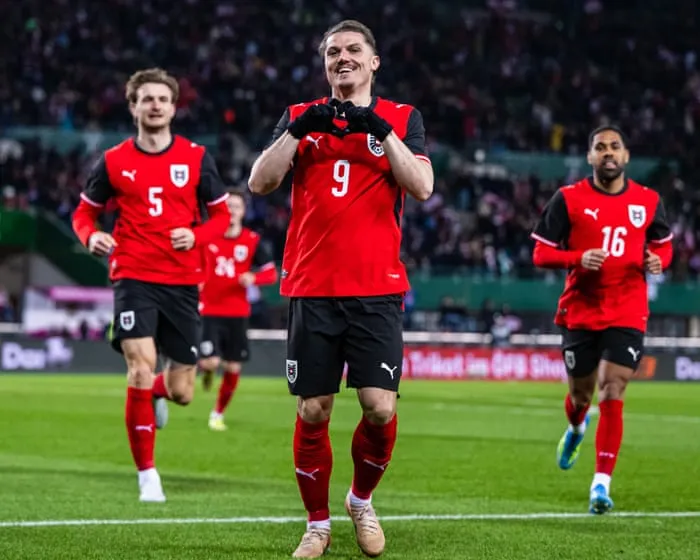
This piece is part of the 2026 World Cup Experts’ Network, a collaboration between leading media outlets from the 48 nations that qualified. As the tournament approaches, previews from three countries are being released daily, with the event set to commence on June 11.
Strategic Overview
Austria faced some scrutiny during their qualifying campaign, notably after a disappointing 1-0 loss to Romania last year. Mircea Lucescu, the Romanian head coach, remarked on Austria’s long-standing squad consistency, noting, “Austria have been playing with the same team for years. That can be an advantage, but also a disadvantage, because opponents now know exactly how they play.” When questioned about this, Austria’s head coach Ralf Rangnick did not seem particularly pleased.
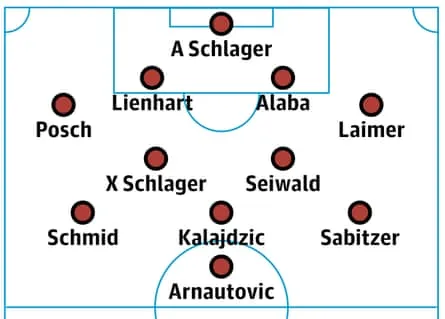
This observation held some validity. For years, Austria’s tactical approach has remained consistent. While player rotations have occurred, the foundation of the team has largely stayed intact: Marcel Sabitzer leading the attack, Nicolas Seiwald and Xaver Schlager controlling the midfield, and a defense anchored by Philipp Lienhart, Konrad Laimer, and Stefan Posch. This continuity has been a significant asset for them.
However, they faced a critical blow just before the tournament, losing Christoph Baumgartner to a thigh injury sustained in a warm-up prior to their match against Tunisia. Rangnick expressed disappointment, stating, “This is of course very bitter news for Christoph and for us as a team. He’s an important player and a key figure within our squad.”
Regardless of Baumgartner’s absence, Austria’s core philosophy remains focused on pressing and applying pressure. Their strategy involves unsettling opponents, accelerating the game’s tempo, quickly regaining possession, and capitalizing on errors. A few years ago, this approach was seen as innovative; now, high pressing and aggressive counter-pressing have become commonplace. Nevertheless, Austria has managed to maintain this balance effectively, having internalized Rangnick’s principles to the point of instinct.
Rangnick elaborated on their methodology, saying, “We have a very ball-oriented approach. Where the ball is, we create overloads. We sprint at the opponent, close off his passing lanes and force errors and turnovers. And when we have the ball, backward or sideways passes are not our preferred option. We want to play forward.”
Austria possesses a clear identity, with players demonstrating a strong familiarity with one another. This team thrives not on individual stardom but rather on trust, collective movement, and shared experiences. The squad has bonded over the years, fostering a flat hierarchy, and they often refer to each other as family. In the realm of football, this term is frequently used, but for Austria, it resonates authentically.
The Coach’s Vision
Winning the hearts of Austrians can be a challenging task for a German, yet Ralf Rangnick has succeeded in doing just that. The 67-year-old has rejuvenated a sense of footballing pride in Austria after years of unmet expectations. Having been a pivotal figure in German football, his most notable achievements came with RB Leipzig, where his strategies significantly influenced modern football, despite a less impactful stint at Manchester United. Rangnick’s strength lies in his straightforwardness: he offers no sugar-coated remarks, delivers praise when warranted, and provides constructive criticism when needed. This candor can sometimes rub people the wrong way, especially when he questions long-established practices, but his results are compelling evidence of his effectiveness. Ahead of Austria’s inaugural World Cup match, he remarked, “Football gives the whole country a lift” and added, “We want to enjoy every single game properly.”
Key Player Spotlight
Identifying Austria’s standout player is no simple task, particularly given the absence of numerous high-profile names. However, Konrad Laimer arguably holds the most significance, especially due to his pivotal role at Bayern Munich, one of Europe’s premier teams. Laimer embodies the qualities every coach dreams of: he commands presence, tirelessly covers the pitch, and meets the demands of top-tier football. His greatest asset, however, is his adaptability. Capable of playing as a left-back, right-back, or central midfielder, he excels in all three positions. His awareness, passing precision, pace, and tackling strength render him one of Austria’s most coveted football talents at present.
Emerging Talent
After a prolonged period of uncertainty, Paul Wanner made headlines in the spring by choosing to represent Austria over Germany. Born to an Austrian mother and a German father, Wanner holds dual nationality and has long been recognized as one of the most promising young talents. His on-field abilities are evident: he possesses a remarkable left foot, exceptional vision, accurate passing, and impressive speed with the ball. Having developed in Bayern’s academy, he transferred to PSV Eindhoven in 2025, where coach Peter Bosz molded him into a No. 6, leading to immediate title success. This is likely just the beginning of his promising career.
Unsung Contributions
Nicolas Seiwald may not garner the same attention as some of Austria’s more flamboyant midfielders, yet he is undoubtedly one of the team’s most essential players. Operating within Rangnick’s system, he undertakes much of the unnoticed labor: closing spaces, maintaining the press, winning second balls, and providing structural support. His absence from the starting lineup against South Korea in March marked the first time in over three years he had not been included, underscoring his importance. Seiwald plays a tidy and disciplined game, rather than a flashy one, although he marked the friendly against Ghana with his inaugural goal for Austria. He embodies the type of player every coach values and that every team needs.
Projected Starting Lineup
A Fan’s Perspective
Austria’s national team has noticeably expanded its fan base in recent years. Even for a qualifying match in Cyprus, 1,700 supporters made the journey, which is a rare occurrence by Austrian standards. Reports indicate that demand for tickets to their U.S. matches has also been significant. Austrian fans typically create a warm atmosphere: only a small fraction come from organized club ultra groups, and the crowd is diverse, cheerful, and often enjoys refreshments. Expect to see lederhosen, vibrant hats, and homemade jerseys, along with supporters determined to stay for the duration of the match.
Political Context
Interestingly, Donald Trump’s description of Austria as a “forest city” holds some truth. Approximately 48% of the nation is forested, encompassing around 4 million hectares of woodland. Within the national team, political discussions have been handled with care. Rangnick criticized Trump back in 2017, yet the squad has remained largely silent on political matters, while Austrian Football Association president Josef Pröll has consistently opposed calls for a boycott of the tournament. Perhaps Austria’s stance can be encapsulated by an old saying: as you shout into the forest, so the echo returns.